 October 29, 2026
Needs-based relief distribution carried out in two lots with support from HOLT
Nuwakot, Nepal — October 2026
On 26 August 2026, a devastating flash flood swept through Nuwakot district, causing widespread destruction to homes, infrastructure, and livelihoods. Bidur Municipality was among the severely affected areas, leaving many families displaced and struggling to meet their basic daily needs. The flood caused extensive damage in several settlements, including Betrawati Bazaar in Ward No. 10.
According to figures confirmed by the local authorities, 1,710 households in Bidur Municipality were affected by the disaster. Recognizing the urgent needs of the affected communities, Slisha prioritized Ward No. 10, where 267 households were reported to have been affected by the floods.
Reaching the families most in need
Before providing assistance, Slisha conducted a field visit and needs assessment to understand the situation of the affected families and identify their most urgent needs. Based on the assessment, 200 of the most vulnerable households among the 267 affected households in Ward No. 10 were selected to receive relief support.
Selecting beneficiaries was a challenging task. The scale of destruction was significant, and many families were facing serious difficulties. With limited resources and so many people requiring assistance, reaching everyone was not possible. Nevertheless, through careful assessment, coordination, and the dedication of everyone involved, Slisha managed to provide essential relief items to 200 households identified as being most in need.
Relief support provided to 200 families
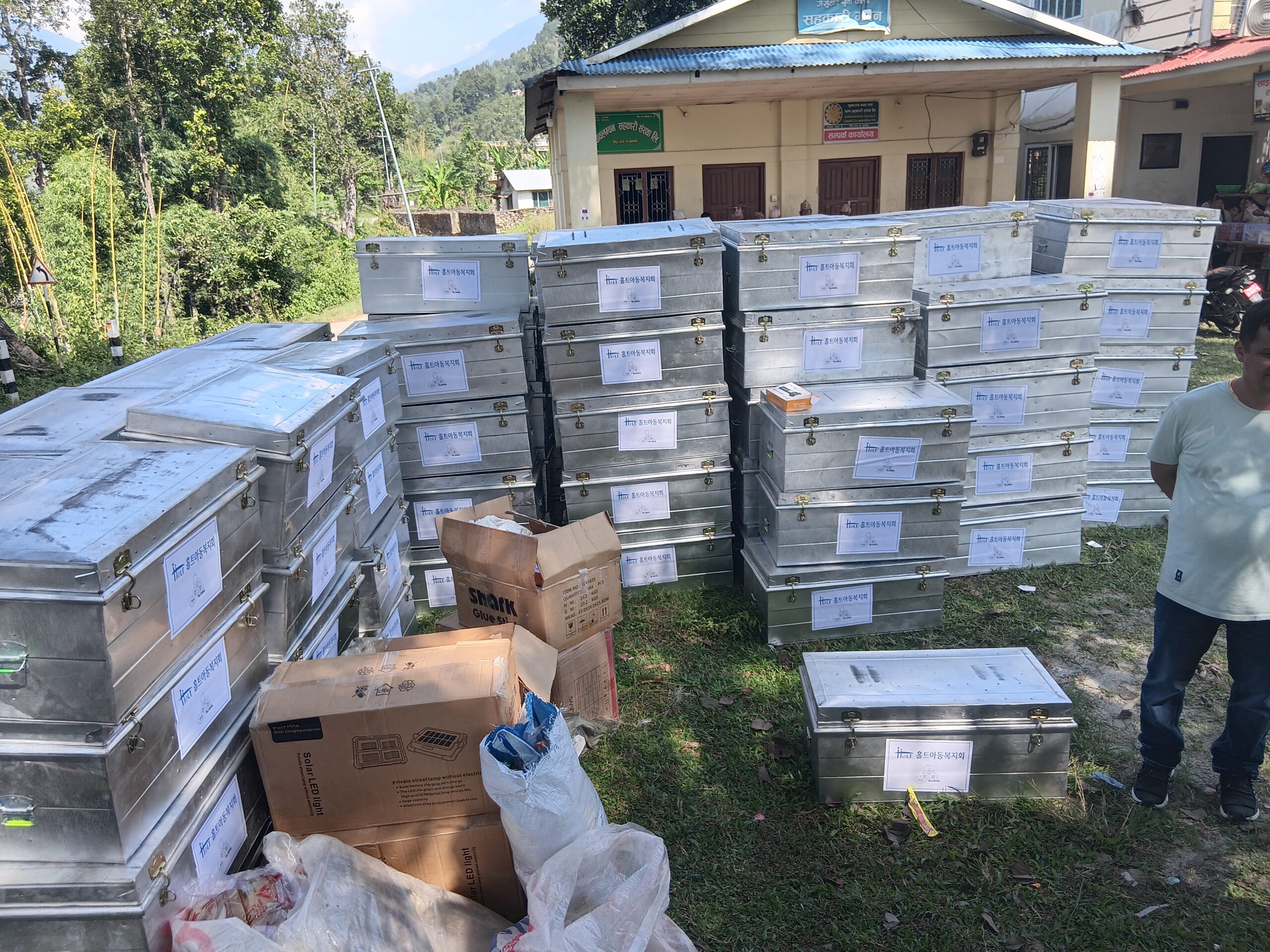
Following the needs assessment, Slisha arranged relief assistance for the selected households. Each of the 200 families received the following items:
In total, the distribution included 200 metal tanks, solar lights and solar torches for all 200 families, 100 kilograms of cumin powder, and 100 kilograms of coriander powder.
The relief materials were distributed in two separate lots, helping facilitate the delivery of assistance to the selected households.
Collaboration and community participation
The relief initiative was supported by HOLT, with volunteers mobilized from Samajik Rupantaran NGO in Nuwakot to assist with the relief activities. The involvement of local volunteers was valuable in coordinating the distribution and reaching the affected families.
The collaboration among Slisha, HOLT, and Samajik Rupantaran NGO demonstrates the importance of partnership and community engagement in responding to disasters. By combining support, local knowledge, and volunteer efforts, the initiative was able to deliver practical assistance to families experiencing hardship.
A small contribution toward recovery
Although the needs of flood-affected communities remain considerable, providing assistance to 200 of the most vulnerable households represents a meaningful step toward supporting their recovery. The initiative also highlights the importance of conducting needs assessments before distributing relief materials, ensuring that available resources are directed toward households facing the greatest difficulties.
Slisha expresses its heartfelt gratitude to HOLT for its support and to the dedicated volunteers of Samajik Rupantaran NGO for their commitment and contribution to this relief effort.
The experience was challenging, but through determination, cooperation, and compassion, the team managed to reach 200 families who needed assistance most. While one relief initiative cannot address every need created by such a devastating disaster, it can provide practical support, restore a measure of dignity, and remind affected families that they are not alone.
Together, through compassion, collaboration, and commitment, we can bring hope to disaster-affected families and help communities move toward recovery with dignity and resilience.